
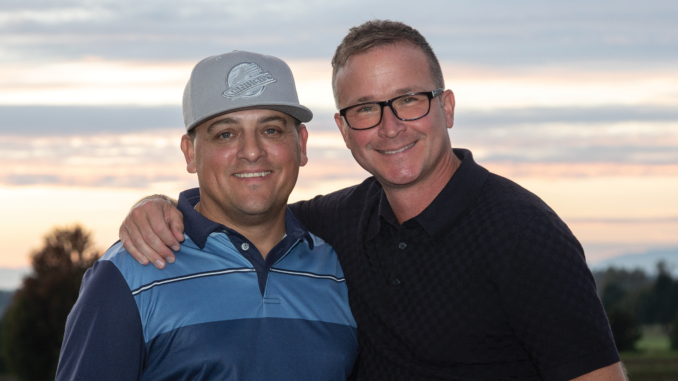
SMACNA-BC and Local 280 talked about historical efforts, open communication, and a Labour Management Cooperation Trust at the 2026 Partners in Progress Conference
By Jessica Kirby
Jeremy Hallman, executive director for SMACNA-BC, and Steve Davis, business manager and FST for Local 280, co-chaired a breakout session at the 2026 Partners in Progress Conference, sharing the steps they and their predecessors have taken to solidify their labour-management partnership. As members of both organizations know, SMACNA-BC and Local 280 meet nine times a year, attend each other’s events, and rely on a Joint Conference Board for mutual support and resolving issues leading up to negotiations.
But it hasn’t always been that way.
Growing roots in partnership
Davis and Hallman gave credit to their predecessors—James Paquette and Bruce Sychuk—for setting the groundwork for a cooperative relationship. “This kind of relationship doesn’t happen overnight,” Hallman said. “Bruce and James forged it over 18 years with a lot of honest conversations, they hired a consultant, and they even went on a traveling road show to share what they learned.”
“Throughout my career, our business managers had this relationship with SMACNA, collaborating on different events and initiatives,” Davis explained. “We always had a good group of people around us that taught us unionism and that when it came to the contractors, we didn’t have to fight with each other.”
Uneasy beginnings
To understand the relationship Hallman and Davis were describing at Partners, it is necessary to have a clear picture of where it came from. When Sychuk and then-Business Manager Robert Colvin got started in the 90s, they had their work cut out for them. The union was financially unstable, and the industry’s market share was about 28%. When it came to negotiations, neither side encouraged the process, and when they did get together, negotiations were unproductive and often ended in fighting.
“It was definitely a tougher time,” Davis said.
“Bruce felt that SMACNA members were informed and they had good participation, but there was certainly no compassion for the business managers or their interests,” Hallman said. “On both sides, there was a lot of pointing out mistakes and not collectively trying to bring each other together.”
Labour Partnership Program
In 2001, SMACNA National ran a pilot program in Ohio and West Virginia that proved an important catalyst for change. The two-day Labor Partnership Program (LPP) was facilitated by Bernie Flaherty of Cornell University. Its focus was on establishing trust and respect, finding ways to make the relationship primary, and developing and strengthening personal relationships.
The program’s initial success caught Sychuk’s attention, and he worked with Colvin to bring the program North. “Basically, the program was about listening and understanding the other side’s needs, goals, and issues,” Sychuk said, in an interview with Sheet Metal Journal during his tenure. “It was simple and broken down in a straightforward way so that we could absorb it.
“Everyone bared their souls and wore their hearts on their sleeves,” Paquette added, in the same interview. “It was not easy. Some came to the table kicking and screaming, and others came and did their best to encourage those who were apprehensive to take a leap of faith.”
And leap they did. The LPP training resulted in SMACNA and Local 280 creating and signing off on a shared mandate outlining the steps they would commit to moving forward. From there, the partnership grew, as both sides bent a little, initially with changes to the CBA and working together on recruitment initiatives.
And then came the Tin Soldier.
Building community
Around the same time, Colvin was approached by a charity group to do something monumental in New Westminster, and Local 280, SMACNA-BC, and Austin Metal Fabricators collaborated to build the 32-foot-tall and 10,000 lb toy soldier that currently sits at the Westminster Quay.
“This was an important collaboration and where things started to change,” Davis said in the presentation. “It was a joint venture, and nobody was looking to one-up the other or get something out of it.”
“At that time, it may have been hard to sit across the table from one another, but if you’re just working on sheet metal, that becomes a much easier collective accomplishment,” Hallman added. “Starting with something everyone could agree on, you end up standing shoulder to shoulder and doing good for the community and from there you start thinking about ways to collaborate on making the industry better.”
Today, SMACNA-BC and Local 280 members enjoy events, activities, and conferences together, along with the benefits of social connections away from the office.
“Relationships are built when you are out there meeting one another and their spouses,” Hallman says. “You start to understand that your labour or management partner is a person you can get to know and not someone you just butt heads with all the time.”
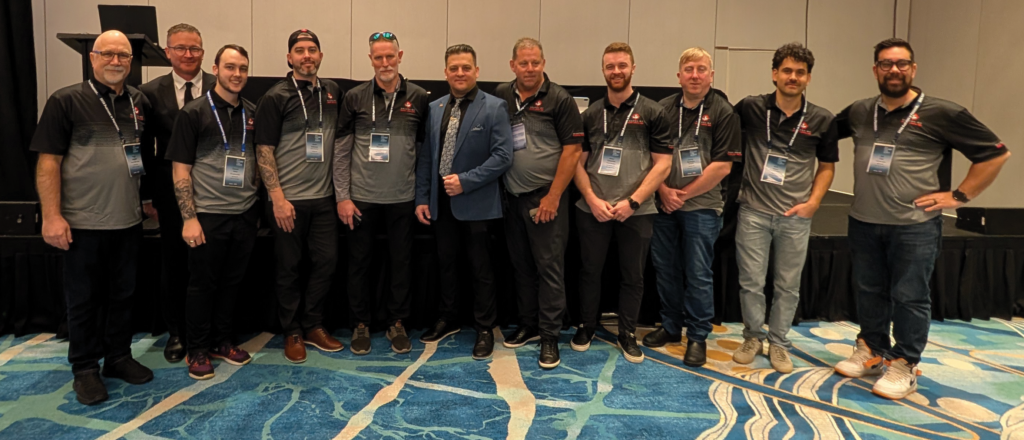
SMACNA-BC and Local 280 members attended the 2026 Partners in Progress Conference
dressed in matching attire to show solidarity in their labor-management partnership.
Labor-Management Cooperation Trust
Hallman and Davis explained that SMACNA-BC and Local 280 have always had a JCB, which meets to discuss industry issues, successes, challenges, and points of interest leading up to negotiations. Meetings are typically followed by social time. This interaction is crucial because it allows Hallman and Davis to go into negotiations ready to ensure their members are taken care of, but also willing to give a little since they’ve each spent the year building social credit.
Relationship maintenance is key. Hallman and Davis explained that they speak regularly on the phone, and when Davis was Local 280’s organizer, he and Hallman would sometimes go together to talk with employers who were interested in joining the union.
Most importantly, Davis and Hallman shared that they are working to ensure that the relationship they inherited from Sychuk and Paquette perseveres into the future.
“Someone from Local 280, the Health Benefits Plan, and I will do a presentation on the first day of apprentice intake class,” Hallman said. “The goal is to show young people the importance of that collaboration, so they know we need each other to get the work done right.”
“We are always trying to get more education to our members and trying to collaborate together so that our messages are the same,” Davis adds. “If our opinions on something aren’t the same, we are willing to listen to each other to decide based on what is right for the membership.”
Read more about this and other presentations from the Partners in Progress Conference, visit pinp.org.
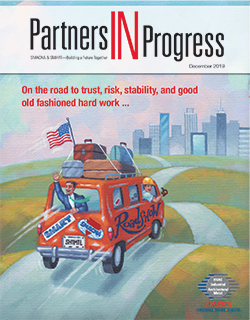
The Partnering Roadshow was developed in 2002, when Sychuk was inspired after listening to Doug McDonald, a sheet metal labor representative who presented on partnership in Vancouver. Sychuk and Colvin hit the road to 10 locations across BC, bringing the labor-management partnership message into shops.
Market share became the common ground to unite parties and demonstrate how one side couldn’t be successful without the other.
“The person on the job site isn’t always aware of market share if they are employed full-time,” Paquette says. “They need to know that, although they might be working 12 months of the year, that means a person is 100% employed, but it doesn’t really indicate that the signatory industry is only getting 35% of the work.”
On the second Road Show, held in 2010, Sychuk and Paquette visited shops and training centers to share what had been accomplished.
“If you can’t bring the horse to water, bring the water to the horse,” Paquette says. “That’s what the Roadshow was about. We went to places of work and employers excused the employees for the afternoon to attend a presentation from labor and management.”
“We spoke to 900 people about how the employer and union are not enemies, and about what we need to do to accept change,” Sychuk says. “We wanted them to embrace the challenge and not blame others for challenges or for what is happening. Our message was to accept the challenges given and work together toward solving them.”
Read the full story about the Road Show in “How to Build a Labor-Management Partnership” featured in the December 2019 issue of Partners in Progress.
issuu.com/partnersinprogress/docs/pinp_dec2019-final