
By Natalie Bruckner
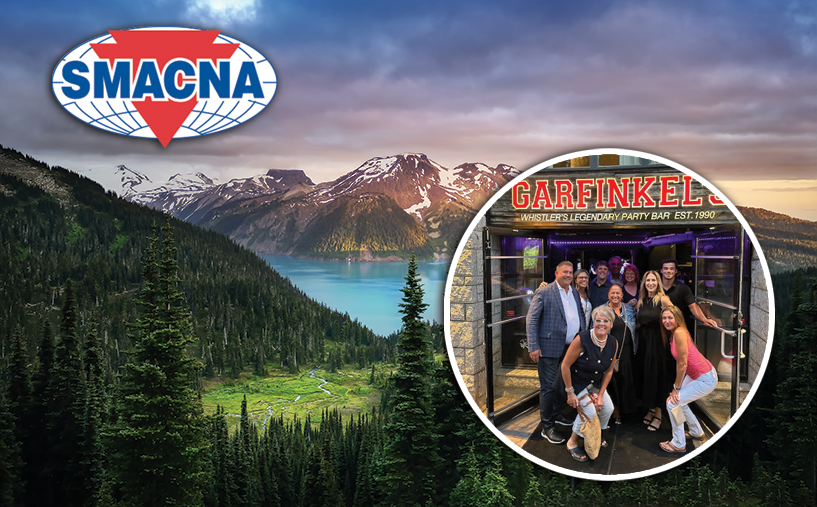
Tariffs, megaprojects, labour-management relations, and even bears were on the agenda at the recent SMACNA National board meeting in Whistler, BC. It is rare for SMACNA National to meet this far north, which made the gathering of more than 50 SMACNA National and SMACNA-BC representatives at the Four Seasons Hotel all the more significant. Jeremy Hallman, SMACNA’s executive director, was also in attendance and joined a reception.
“SMACNA National and SMACNA-BC have always been close,” says Aaron Hilger, CEO of SMACNA National. “The BC chapter is the most engaged Canadian chapter, and I have a great relationship with former executive director Bruce Sychuk, so it made sense for us to hold our board meetings in Whistler again. Canada is known for very friendly people, and we all enjoyed the experience. A few even got to see a bear for the first time.”
The meeting offered more than scenic views. It was an opportunity to compare notes between US and Canadian markets. Hilger says having perspectives from different markets is essential for SMACNA. While the United States and Canadian markets share similarities, they also have key differences. “That’s where we can learn from each other to help make us smarter and, hopefully, better contractors,” he says.
Bernie Antchak, who represents SMACNA-BC on the National Board, agrees. “The potential lies in learning from each other,” he says. “SMACNA National members are viewed as colleagues, not competitors. BC contractors can gain valuable insights when we come together, helping them leapfrog years of experience,” he says.
A hot topic of the meeting was US–Canada relations, particularly around tariffs, which have created pressure in the construction industry. “There is a lot of strain coming from the United States government these days, and one of the ways we can work together is to communicate clearly on those uncomfortable issues,” Hilger says. “Most SMACNA members are upset about the tariffs. We also don’t like seeing our friends treated poorly. Knowing that we are all in this together is important.”
These trade challenges and opportunities intersect with the surge of large-scale construction projects in the United States, called megaprojects, which can draw humanpower away from smaller unions and weaken regional labour pools. “The main challenge is getting people to move to busy areas,” Antchak says. “Some solutions that arose include reaching out to unions in slower areas and offering a living-out allowance as an incentive. These projects are massive, unlike anything we see up here in Canada.”
Business in the United States remains strong as a result. In fact, Hilger notes that American hours are up roughly five percent nationally. “The Canadian markets are also strong, which is great for our members in those areas,” he adds.
Beyond market conditions, the meeting explored how SMACNA is helping members adapt to new technologies and maintain a skilled workforce. One outcome was the board’s decision to continue investing in the association’s AI project. “We have provided a lot of resources for members and will be investing in more tools for contractors. Helping our members embrace technology is important for us to stay competitive. It is also a pretty interesting topic to learn about,” Hilger says.
For Antchak and SMACNA-BC it was also interesting to learn about the efforts being made south of the border on both mental and physical health programs, which is a rising problem. “Mental health is becoming a major focus because people are under more pressure. Every member should have access to support to maintain well-being,” Hilger says. Antchak commended SMACNA National on its efforts to address the issue in the United States.
While Whistler’s mountain backdrop and the Four Seasons’ hospitality offered a memorable setting, timing was just as critical. With tariffs, supply chain pressures, and megaprojects reshaping construction on both sides of the border, building strong cross-border relationships is essential.
“We’re in a time when the challenges we face are increasingly connected,” Hilger notes. “Having that cross-border dialogue in person makes us better prepared to meet them.” ■