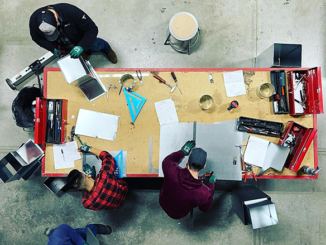
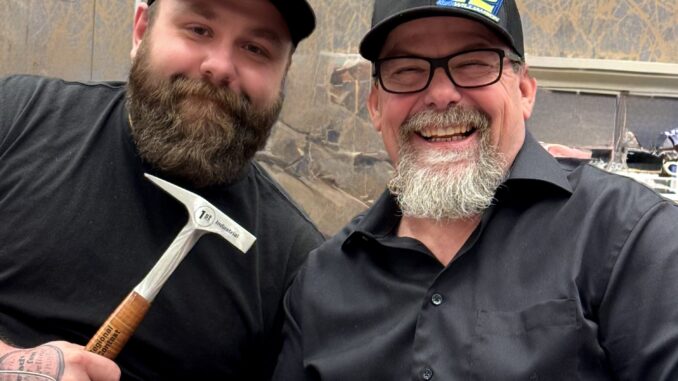
SMI instructor Paul Culp grew up in the drag racing scene—a lifestyle that led him to sheet metal work and helping apprentices secure a brighter future.
By Jessica Kirby
Paul Culp’s father built drag cars for a living, and Paul worked for him for as long as he can remember. “He taught me how to wire weld at ten years old,” Culp says. “By the time I was 16, I was Tig welding parts for cars going 250 MPH.”
He merged into fabricating the interior sheet metal and dragster bodies on race cars, and people at the local dragstrip in Woodburn, Oregon, started calling him the Tin Man. Fast-forward to when Culp was in his early 20s, and his dragster life took a turn.
“Me being a typical young buck, my father and I were not getting along very well at work,” Culp says. “One day, I showed up late to work, and we proceeded to have a ‘discussion.’ At the end of it, we both knew it was time for me to move on.”
That afternoon, once the dust had settled, Culp’s father brought him an application to a sheet metal shop and encouraged him to apply. “He said to me, ‘Here, go do this. You will be good at it.’ So, I did.”
His father was right. Culp worked at non-union shops for three or four years and soon realized that to better himself for his small family, it was time to kick it up a notch. He joined Sheet Metal Workers Union Local 16 in Oregon-Southwest Washington in 1994. After journeying, Culp spent 22 years on the tools before shifting gears again.
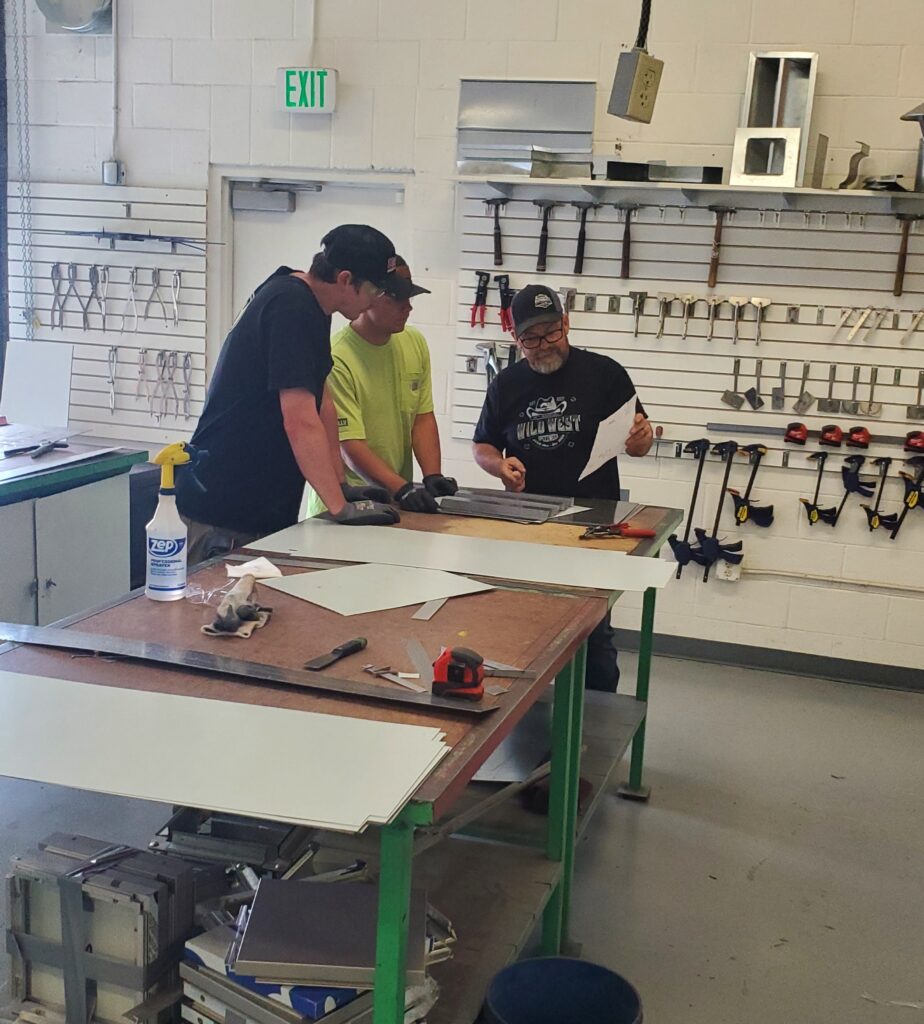

In 2020, he applied for a role as an instructor at Local 16’s JATC and was successful. He’s been there ever since as an instructor and certified welding inspector. “I truly enjoy my job as an instructor, knowing I’m teaching lifelong lessons to my students,” he says. “Knowing that they will use the skills and knowledge they learn to feed their families and pass those skills and that knowledge on to others is very satisfying.”
His favorite part of being an instructor is when a student comes in ‘green’ and, as he explains it, he can see ‘the lights come on’. “Knowing I have helped them get there is everything to me,” he says. “My proudest moment as an instructor happened this year at the regional Sheet Metal Workers’ Competition when Dustin Comer took home the 1st place finish.”
His career in sheet metal thrived, but he never let go of his passion for the track. “Growing up around race cars and hotrods put racing in my blood,” he says. “I’ve always been a very competitive person.”
When he was 23, he attended a local Saturday night Circle Track race with his brother-in-law Rick Tyndall. They were at the track talking about the entry level class when Culp commented, “I can build one of these cars.” The following Monday, Rick called him over to hang out. When Culp arrived, Rick said, “I’ve got something to show you.”
“We went out to his garage,” Culp says. “He lifted the door and there sat a 1970 Ford Pinto—the perfect car to fit the track’s requirements for the Claimer class. So, it began.”
By Thursday, they had the car stripped and a roll cage, racing seat, and belts installed along with a custom five-gallon fuel cell Culp built from scrap metal he found at work. “We went out and won the first race we entered, and it’s been ‘fish on’ ever since,” he says.
Since then, he has built around 50 cars for himself and others. He has won multiple track championships and state championships as both a driver and car owner/crew chief for two different drivers.
In 2024, Culp’s driving career came to an end. He was in a crash that caused a brain bleed and led to three strokes. “Luckily, I had no underlying health conditions and I have made a full recovery,” he says. “But my doctors advised I take a back seat.”
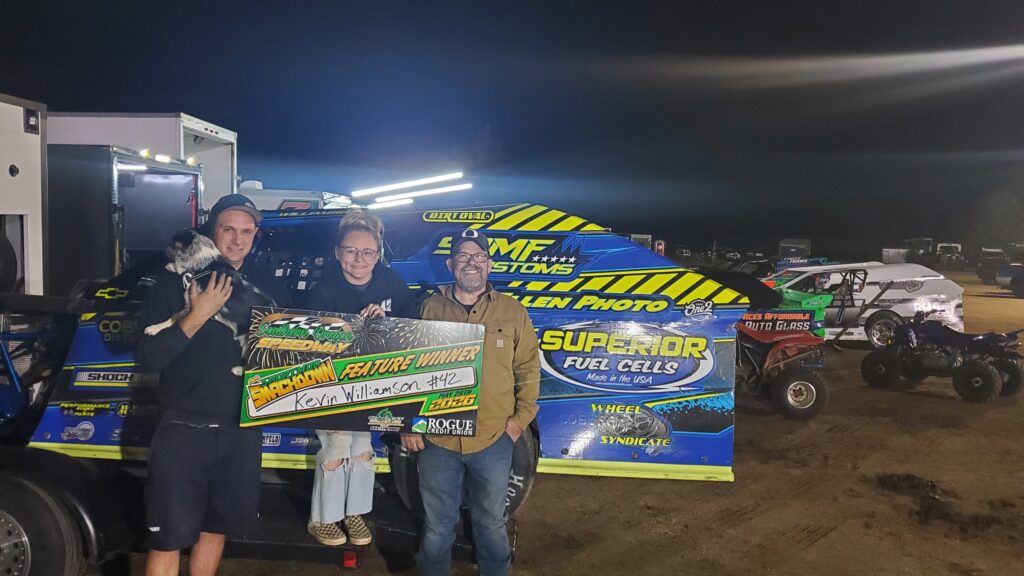
Today, he is a crew chief/car owner for a young gun named Kevin Williamson. In 2025, Culp’s team won track championships at both Cottage Grove Speedway and Douglas County Raceway, and they won the IMCA Oregon State Championship and the IMCA Western Region Championship while finishing sixth in the nation in season points.
“The coolest thing about my career and racing is that they somewhat go hand in hand,” he says, drawing on the similarities between sheet metal fabrication and race car fabrication. “The competitiveness in racing goes right along with doing everything with a purpose in sheet metal. If you set your car up in the garage correctly, your chances at the track are far better to win. In sheet metal, the same is true: the better you plan and execute in all areas, the more successful you will be.”