By / Jessica Kirby • Photos courtesy of Streimer
Completing simple to seemingly impossible projects, Streimer finds a way, backed by nearly 80 years in business and a deep sense of continuity and family.
When Daniel Streimer returned home to Portland from WWII, the trained sheet metal mechanic, skilled craftsman, and natural leader was ready for something new. Always up for hard work and a challenge, Daniel and his wife, Betty, founded Streimer Sheet Metal Works in 1946 with a simple mission—treat customers like royalty, be honest, solve problems, be dependable, and charge a fair price. By 1958, Streimer Sheet Metal Works was booming.
First Michael and then his brother Frederick Streimer took over the reins from their father Daniel, and now Steven Streimer is serving as the company’s fourth president. Together with his father Frederick as Chairman of the Board and Secretary/Treasurer, they continue Daniel’s legacy of reliability and innovation.
During nearly 80 years in operation, the company has undergone many changes and developments, keeping up with the evolving demands of the trade.
“Early on, we considered ourselves lucky to have some basic powered equipment including mechanical shears, press brakes, and turning machines,” says Steven Streimer. “Much of the process was manual, including hand layout of duct and fittings. There was a time when use of technology meant using a projector to display a pattern on a flat sheet to reduce the hand layout required.”
The 70s to the 80s brought a coil line to fabricate rectangular ductwork and a spiral machine to produce round spiral pipe. A major shift occurred when the computerized plasma table hit the scene.
“In the 90s we saw the beginning of CAD/CAM integration,” Streimer says. “In the early 2000s and 2010s, the use of 3D CAD really took a foothold, and we began to see a direct connection between what was drawn and what we built. We also adopted lean manufacturing practices during this time.”
Since then, the adoption of new technologies has occurred quicker and more frequently than ever, and with that, increased collaboration and integrated project design. “We now see the use of technology to laser scan existing mechanical systems and perform layout in the field, the adoption of laser welding, use of cobots in the manufacturing process, and a move from plasma cutting to fiber laser cutting,” Streimer says. “It is an exciting time to be in the mechanical and sheet metal industry.”



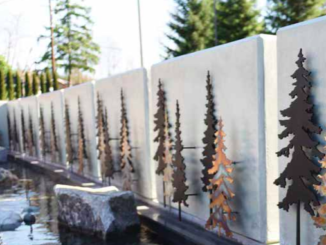
The company has a long and impressive roster of landmark projects in the Portland area, including the full architectural sheet metal scope of work on Concourse E in PDX Airport’s impressive two-year expansion project.
In early 2025, Streimer provided full mechanical, medical gas, plumbing, and architectural work for Project Whiskers—Dove Lewis Animal Hospital’s new 63,520-square-foot, three-story emergency facility. This expansion doubled the hospital’s clinical footprint and enabled the addition of vital specialty services, strengthening their ability to provide advanced veterinary care.
Partnering with Skanska (GC) and Mackenzie (designer), Streimer self-performed HVAC wet, dry, and plumbing, including six rooftop gas-fired AHUs, a chiller, and a VRF system to support the hospital’s new MRI capabilities. The team prefabricated corridor racks with piping offsite for a streamlined installation.
“Streimer also supplied and installed the exterior façade, incorporating Kingspan insulated metal panels, Terracotta cladding, CMC aluminum composite panels, MOZ decorative panels, and custom flashings and trim, creating a striking and lasting landmark in Portland,” Streimer says.
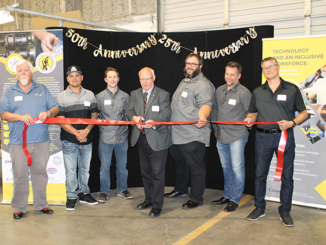
Looking to the future, Streimer recently opened a new operations support center in Beaverton, Oregon. The new, state-of-the-art shop includes 65,000 ft2 of fabrication and warehouse space and 36,000 ft2 of covered storage. The 12-acre site offers space for additional prefabrication and assembly operations as needed.
“This investment was necessary for Streimer to increase production capacity, expand capabilities to include plumbing and piping prefabrication, and improve operational efficiency,” Streimer says.
The new location introduces centralized operations to reduce time spent coordinating across multiple locations, and it offers capacity and room to grow, readying Streimer to meet increasing demand.
“With everything under one roof—from fabrication to tools and equipment storage—this centralized hub supports all of our construction activities,” Streimer says. “Our fabrication facilities are world class in operational efficiency, safety, and the effective use of technology to support our customers.”
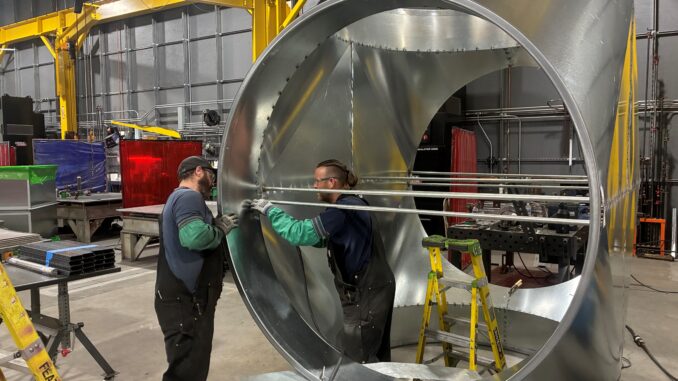
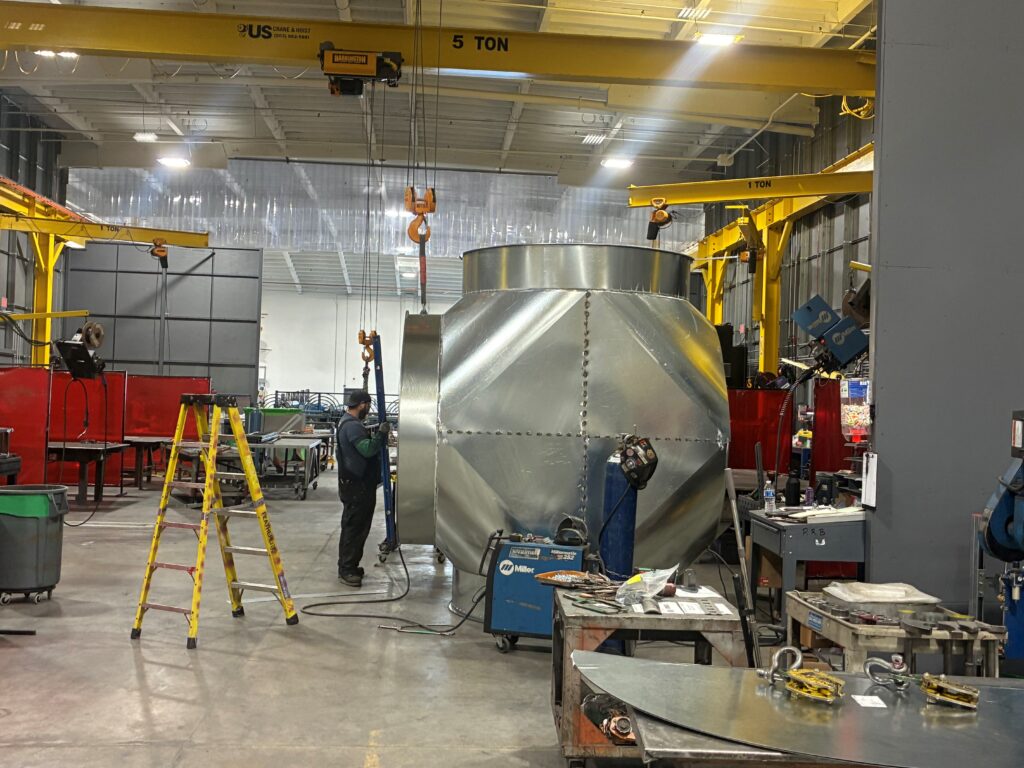
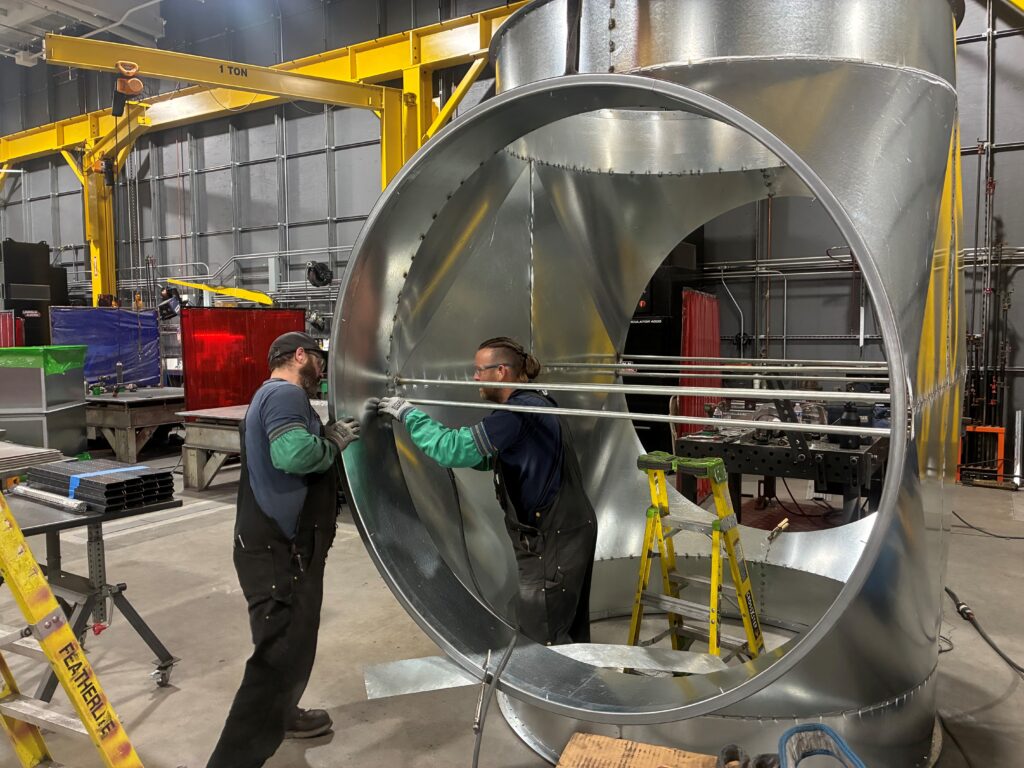
The building operates two fiber lasers, an automated duct fabrication line, and high-capacity custom round and rectangular duct fabrication lines. The custom fabrication and welding area includes three overhead cranes that extend over 18,000 ft2 of the shop, and laser welding and cobot welding capabilities further enhance efficiency and quality.
Like any growing company, Streimer has had its share of challenges and adversity but at its core, it is a company committed to delivering solutions, and its team faces those challenges head on, learns from the experience, and prepares for the next challenge. “We find a way,” Streimer says. “It is just what we do.”
He adds that at the heart of this success is a strong, team-focused culture. “We believe in the power of our people—we win together, learn together, and support one another every step of the way. We are not big on titles but instead a company of doers. Everyone rolls up their sleeves and contributes, because we know it takes all of us to make things happen.”
What truly sets Streimer apart is its deep sense of continuity and family. Now in its third generation, the business has grown alongside generations of employees who’ve built their careers there.
“In many cases, parents, children, and even grandchildren have all worked with us,” Streimer says. “We are a team that’s grown together over time, which creates a sense that we are part of something bigger.” ■